When I became a mum, the first thing that went straight out of the window was looking after myself. In the early days, there just wasn’t any time. If I didn’t have time to sleep, no way did I have time to paint my nails. Putting your children first is natural and right, but it’s very easy to get in the habit of ignoring what you need to feel like you. The list of things to do is so long that mum’s needs fall off the end of it.
It took me getting into a very stressed and unhappy state to realise that I absolutely deserve to spend time on myself. Self-care is a necessity, not a luxury. So over time I have slowly been developing little habits that make me feel just a little more content, a little more calm, and a little more me.
I thought that sharing my list of things might provide others with some food for thought. Doing even just one, in my opinion, will help you feel less stressed, angry, sad, anxious, or any of the other feelings that we’d like to feel less of. When doing these things means taking time away from my kids, I don’t feel guilty because I know that doing these things makes me a better mum when I am with them. If I’ve had my needs met, I’m less likely to shout when they wind me up. So it’s a winning situation for everyone.
1. Buy yourself little treats that help you slow down and appreciate life
For me, I started spending more money on buying nice shower gel and moisturiser. I used to use whatever was lying around or on offer at the supermarket. But more recently, I realised I really love that ‘spa’ scent you get from certain products, particularly ones with a lavender, rose or bergamot scent. I bought some for myself and now every time I take a shower I can close my eyes and pretend I’m in a spa. It seriously sets me up for the day.
For you it might be nice throw cushions, candles, flowers or posh chocolates. You don’t need to wait for someone else to treat you. It doesn’t need to be super-expensive. But find that one little treat that will give you a moment of contentment in your day.
2. Carve out kid-free time whatever way you can
I’m lucky because I do have time alone in my house when my kids are at school or nursery, and I also have a supportive husband who spends an equal amount of time looking after them. But even if you are a full-time mum and single parent, I think it’s worth going out of your way to find kid-free time and then treating yourself. For example, save your shower with the nice smelly soap for after they’re in bed (or before they wake up, or after they go to school). This way, you can spend a little longer at it, and no one will barge in and have a poo during it.
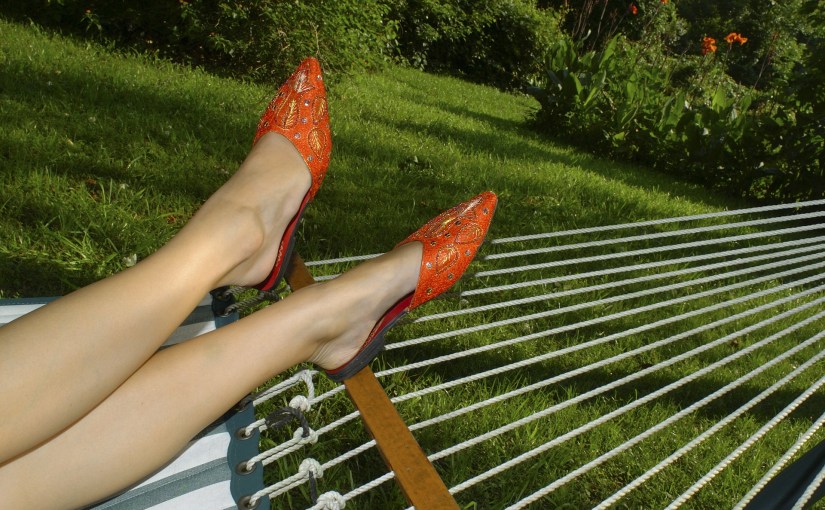
3. Style your hair, do your nails, wear perfume, makeup and nice clothes whenever you want (or not)
On days I stay home with the kids, I have previously had a habit of slobbing about in sweats with my hair sticking out in funny directions. And there is absolutely nothing wrong with that. But more recently I’ve realised that I’d gotten in a frame of mind that said if I was just going to be at home there was ‘no point’ in me looking and smelling good. I kind of thought I was wasting time if I took the time to do my hair. I only wore perfume and clothes that made me feel pretty if I was going out somewhere.
More recently, I’ve decided to wear perfume every single day. Because I like it. When I spritz it on, I feel happy and beautiful. It’s not a waste to put it on if no one else is going to smell it. It’s enough for me to smell it. I’ve started taking the time to style my hair and wear my favourite clothes on the weekend. I’ve let go of the notion of ‘saving things for best’. Life is short and I want the best every day. 🙂
But sometimes I can’t be arsed with all that and I don’t do it. Which is also a-ok.
4. Have reassuring rituals and routines, but break them sometimes
Our house is pretty big on routines. There are bedtime routines for the kids, and I have a bedtime routine for myself as well. We have family Saturday morning rituals (like snuggling in bed watching Paw Patrol) and Sunday dinner rituals (we always sit down for a proper meal with pudding). I find these rituals comforting. Everyone knows what to expect and what to look forward to.
But sometimes, we throw it all out the window and go out to eat or have a floor picnic instead of a proper meal at the table. Sometimes, in the summertime, I let the kids stay up until it’s actually dark out and then put them to bed only when they’re ready to drop. Sometimes we go out to a friend’s house and let them run wild while we socialise and drink a beer.
Rituals and routines are all the sweeter when we aren’t tied down by them.
5. Use your skills for something other than parenting
Parenting is one of the hardest things I’ve ever done, and there are definitely many skills involved, some of which I don’t have. Like sewing and ironing. But all of us have skills that have absolutely nothing to do with parenting as well, and it’s important to keep using these.
In my case, I love my paid job. The skills I use there sometimes dovetail with parenting skills (like dealing calmly with difficult people), but for the most part I’m using a totally different part of my brain. If you don’t have a paid job, or hate your paid job, find a hobby or some volunteer work.
Some people write poetry or, erm, blog. Some people are good at arts & crafts. Some people play a sport or get involved in another group such as a choir. Some people are really fab at helping out at their kid’s school, or they spend a few hours working at a charity shop or keeping people company at a care home.
It is really important to use the skills that make you who you are – and in most cases, you’ll be making a contribution to society at the same time.
6. Exercise. Seriously, this is non-negotiable.
You wouldn’t have heard me say this a few years ago, but exercise is absolutely essential to life. I’m not saying it has to be high-impact or hardcore, but you need to move your body.
After having a breast cancer scare last year, I was seriously shaken up about my health. I realised how fast everything can be taken away by bad health. As the evil six-fingered man on The Princess Bride once said, “If you haven’t got your health, you haven’t got anything”.
Soon after my scare, I came across a news article that had a doctor saying exercise should be approached just like other aspects of personal hygiene. If you would never skip brushing your teeth, you should never skip exercising.
But equally, I realise how hard it is to fit exercise into a busy life of parenthood, work, housework and a social life. For me, I’ve started using an exercise video streaming service. I wake up at 5:30am and sneak downstairs to do aerobics and weight-lifting in my dining room before the kids are awake. The streaming service is great because there is loads of variety (unlike old-fashioned workout DVDs). I also make the choice to walk whenever I can instead of taking the bus/tube/car.
I think everyone should make exercise a priority in life. Put it in your diary and treat it like a real appointment. The kids can entertain themselves for an hour. If you have a newborn, stick the baby in the buggy and go for a walk. Basically everything in life can be put off for an hour (or even just 30 minutes) for you to get healthier.
Since I’ve committed myself to exercise, not only have I gotten fitter and healthier but I am happier all the time. I used to scoff at the idea that exercise would give you more energy instead of make you tired but it’s absolutely true once you get yourself into a routine that works for you. And the science says you’ll probably live longer too.
7. Don’t sweat the petty things
An old friend of mine used to say ‘don’t sweat the petty things, pet the sweaty things’. Which was a vaguely suggestive way of saying you’re better off doing something that’s a bit of a laugh than worrying about something that is pretty unimportant in the grand scheme of things.
Are you worried you said something stupid or rude to someone recently? Unless that person is noticeably cheesed off at you, you probably didn’t. I tend to worry I put my foot in it all the time, when I totally didn’t. Don’t ruminate on things you said or did and worry whether they were right or wrong. It’s such a waste of time.
Are you worried because you’re not a domestic goddess? Did you take store-bought cakes to the school bake sale? Do you have a mountain of washing in your house that threatens to take on a life of its own? Do you have last week’s sandwich crumbs littering the floor of your kitchen? Or perhaps toothpaste smears in your sink?
Don’t sweat it.
Nobody ever laid on their deathbed and said, ‘I wish I’d kept a cleaner house’.
Play with your kids, read a book or magazine, watch trashy TV, do your exercise and enjoy your life. You’ll clean when you feel like doing it and that’s often enough. You’ll bake if you fancy it … and if not, everyone loves Mr Kipling’s anyway. Get your neighbour to sew that hem on your son’s trousers and save ironing for weddings, job interviews and funerals.
That’s what I do, anyway. 🙂




 The Mum Reviews